


Leys d'amors: Troubadours and the Music of Courtly Love

Few traditions have captured the imaginations of our modern world so thoroughly as that of the medieval court, in large part due to the ideas of chivalry and courtly love. In particular, the musical traditions that stemmed from those practices have far outlived the philosophies that fueled them. While some might argue "chivalry is dead", the songs written by troubadours and knights-errant have lingered to this day. On May 31st at 4 pm, at Crestwood Christian Church, Musick's Company will explore those themes in our 2026 spring concert: "Medieval Chivalry: Tales of Knights and Courtly Love". To make sure you're ready, keep reading and learn all about how these "songs of love" communicate the norms and values of medieval times.
Courtly love was born in the lyric, first appearing with Provençal poets in the 11th century, including itinerant and courtly minstrels such as the French troubadours and trouvères, as well as the writers of lays. It is difficult to know how and when these songs were performed because most of the information on these topics is provided in the music itself. One lay, the "Lay of Lecheor", says that after a lay was composed, "Then the lay was preserved / Until it was known everywhere / For those who were skilled musicians / On viol, harp and rote / Carried it forth from that region…" Scholars have to then decide whether to take this description as truth or fiction.

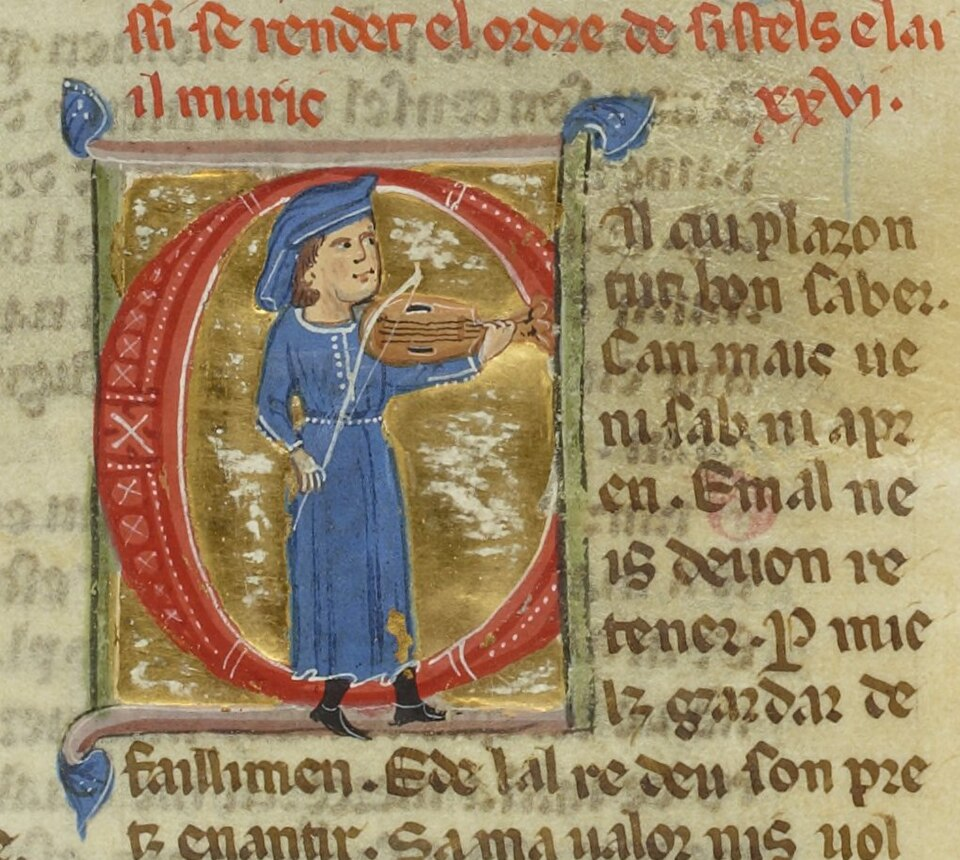
Period examples of performance practice, of which there are few, show a quiet scene with a household servant performing for the king or lord and a few other people, usually unaccompanied. According to scholar Christopher Page, whether or not a piece was accompanied depended on the availability of instruments and people to accompany—in a courtly setting. For troubadours or minstrels, pieces were often accompanied by fiddle, also called a vielle, or a harp. Courtly musicians also played the vielle and the harp, as well as different types of viols and flutes. Later courts, such as that of Henry VIII, assigned court performers to create massive pageants featuring stories and songs from the time of the troubadours.
Once the troubadours had solidified their style, they created a set of "rules" around which they constructed their works. The Leys d'amors (compiled between 1328 and 1337) is one of the best-known collections of these rules. Initially all troubadour verses were simply called vers, yet soon this was reserved for love songs and later replaced by canso. Troubadour cansos explored a variety of genres that served many purposes, including crusade songs, riddles or cryptograms, lover's apologies and more. Writers often combined genres to create unique lyrical works that served specific political, emotional or sociocultural purposes.

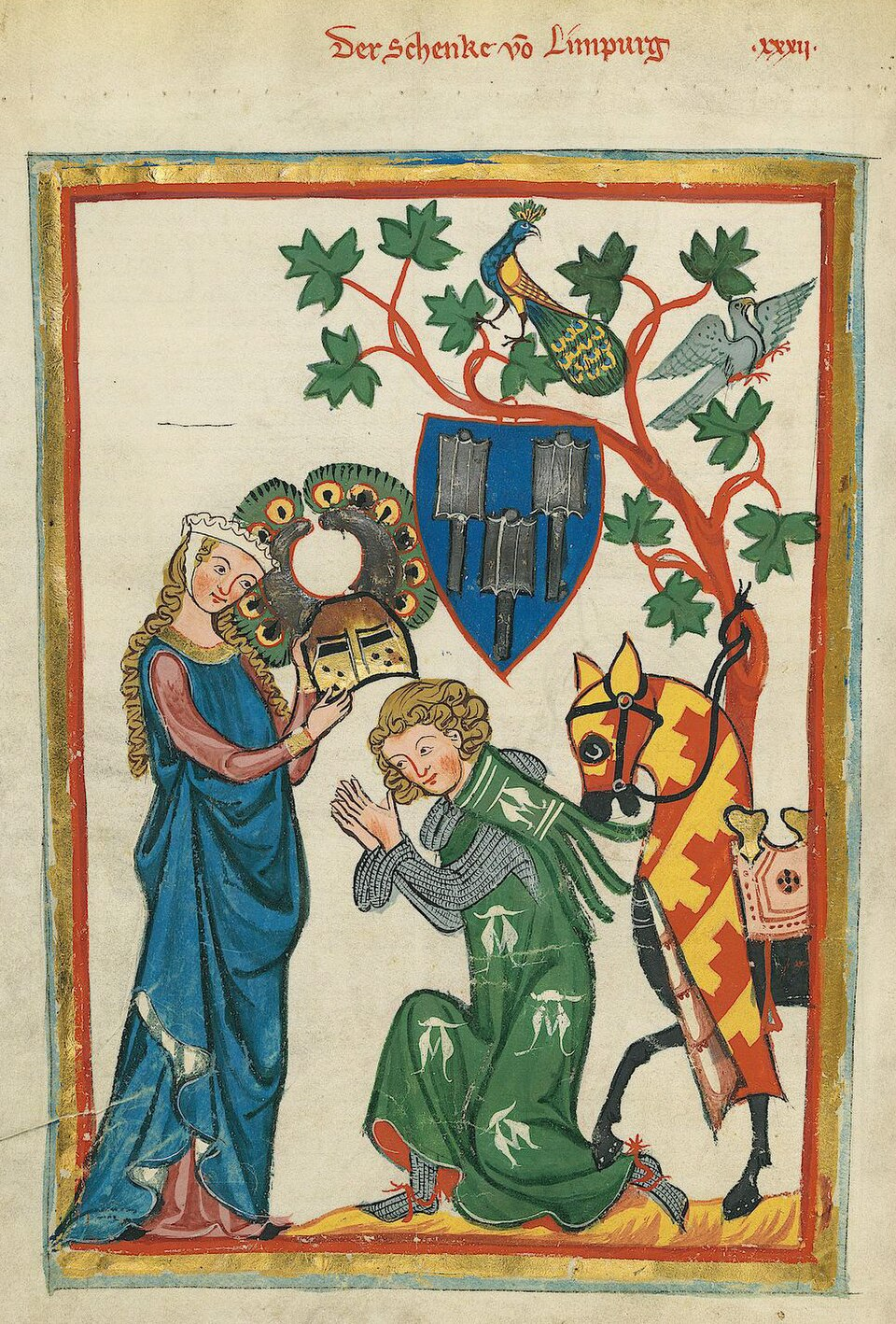
As these practices spread across the continent, specialized traditions developed based on geography and cultural differences. One such example is minnesang, a tradition of German lyric- and song-writing that flourished in the Middle High German period (12th to 14th centuries). The name derives from minne, the Middle High German word for love, as that was Minnesang's main subject. People who wrote and performed Minnesang were known as Minnesänger, and a single song was called a Minnelied. Several of the best-known Minnesänger are also noted for their epic poetry, among them Heinrich von Veldeke, Wolfram von Eschenbach and Hartmann von Aue.

We can't discuss the music of courtly love without mentioning the trobairitz -- the female troubadours. These women were the first female composers of secular music in the Western tradition, and almost exclusively hailed from Occitania (modern-day France and Spain). The number of trobairitz varies between sources: there were twenty or twenty-one named trobairitz, plus an additional poet known only as Domna H. Only one melody composed by a trobairitz (the Comtessa de Dia) survives. Out of a total of about 450 troubadours and 2,500 troubadour works, the trobairitz and their corpus form a minor but interesting and informative portion. Their experience as women in the medieval period adds a unique perspective to an otherwise male-dominated corpus of chivalric music.

It might surprise you to know that the proliferation of troubadours and similar wandering minstrels only lasted for around a century. However, the influence of the troubadours and jongleurs on subsequent artists and musicians cannot be overstated. Some 2,600 poems or fragments of poems have survived from around 450 identifiable troubadours. They are largely preserved in songbooks called chansonniers made for wealthy patrons. The songs within these chansonniers endured, appearing in courtly performances and events for many years to come, and inspiring creative minds well into the 20th century. Even today, the image of the wandering bard lingers in films, fantasy novels, and tabletop role-playing games like Dungeons and Dragons.
You might be asking yourself, "Man, where can I hear some of this awesome music?" AS we mentioned earlier, on May 31st at 4 pm, at Crestwood Christian Church, Musick's Company will present "Medieval Chivalry: Tales of Knights and Courtly Love". This is a perfect opportunity to hear some of the songs performed by troubadours, and the music they inspired! Check out our Facebook event to learn more!

Comments