


In Case You Missed It: "Medieval Chivalry: Tales of Knights and Courtly Love"


How now, good friends? Summer is a'comin' in, and Musick's Company welcomed the season on May 31st, 2026 at Crestwood Christian Church. "Medieval Chivalry: Tales of Knights and Courtly Love" transported an enthusiastic audience of friends to the age of royal courts, ferocious battles on horseback, and timeless romance. If you weren't able to attend, fear not. Sheathe your sword, lay down your banners and enjoy this eyewitness accounting of Musick's Company's performance!
Anyone familiar with Musick's Company and their parent organization, the Center for Old Music, knows that medieval and Renaissance music often serves as the bread and butter of our performances. As stewards of early music, the works of Landini, Machaut, and others featured in last night's concert have certainly appeared before, and likely will again. What makes this particular collection of music so special is the way in which it explores the concepts of chivalry, warfare and love. While it might seem this music singularly celebrates the period, if you look closer you can see cracks in its idealized veneer. Accountings of violence, war, imprisonment and the emotional pain of separation from loved ones go hand in hand with dreamy visions of knights and ladies. All told, this program offered not only entertainment, but education: something CFOM strives to provide at each concert we perform.

Our concert began with a bang: two different bombastic dances that got the blood pumping! First, the instrumentalists of Musick's Company performed Saltarello con trotto, a dance originally from late-fourteenth- or early fifteenth-century Italy. This dance earned its name for its fast triple meter and peculiar leaping step for which it gets its name, after the Italian verb saltare ("to jump"). Trotto literally refers to "trot", and often accompanies the saltarello in musical notation, indicating the performance style of the dance. Next, the talented singers of Musick's Company performed "A l'entrada del temps clar", a traditional Occitan folk song. This call-and-response piece is often labeled as a children's song, referencing the dancing and merriment to come with the arrival of spring.

The dance didn't stop with the concert's opening numbers; from there, our musicians performed another saltarello. Subtitled "La Regina", this toe-tapping piece would fit in perfectly at a royal pageant. Unfortunately, because this piece is anonymous, we will likely never know to whom "La Regina" refers. From there, the choir moved us into the first attributed pieces of the night: Ecco la primavera and Rose, lyz, printemps verdure. The first, composed by Francesco Landini, follows the form of the ballata, an Italian poetic and musical form in use from the late 13th to the 15th century. The ballata was one of the most prominent secular musical forms during the Italian ars nova, and most scholars consider Landini its master. Rose, lyz, printemps verdure comes from the works of Guillaume Machaut, a musician so iconic that he defines the ars nova period, and scholars mark its end with his death. A fine example of the rondeau form, this work seems to have circulated after Machaut’s death. Soloists Dan Frey, Janeway Howard, and Victoria Sullivan further illuminated the beauty of these texts with their performances.

Next, we headed into another instrumental block, featuring a sparkling solo on harp by Jane Johnson. Et ideo, composed by the legendary Hildegard von Bingen, cast a spell of peace over the venue, moving us away from festive excitement and toward silent introspection. Musick's Company instrumentalists followed this with O virgo splendens, a 14th century Catalan piece from the Llibre Vermell de Montserrat. Written in Catalan, Occitan and Latin, the songs found in this compilation were written for the pilgrims to have something appropriately "chaste and pious" to sing and dance to. One can almost imagine these wanderers gathering together within this place to rejoice when listening to the workings of Musick's Company.

The next segment of our concert explored the lot of knights and soldiers of the medieval and Renaissance periods. Soloist Dan Frey stepped up to the plate, singing a mournful rendition of Ja nus hons pris accompanied by the talented John Koenig on sackbut. Translated as "No Man Who Is Imprisoned," it has also been called "Song Of Captivity" and "King Richard's Ballad" It was written originally in French (i.e. the French language of the day) and the now endangered language Occitan by Richard The Lionheart, King of England in 1192 after his capture by Leopold V, Duke of Austria and later the Holy Roman Emperor. Much like this song mourns the realities of imprisonment, Musick's Company mourns the imminent loss of Dan from our ranks (he's only moving, don't worry!) He was recognized and thanked by both musicians and audience in attendance.
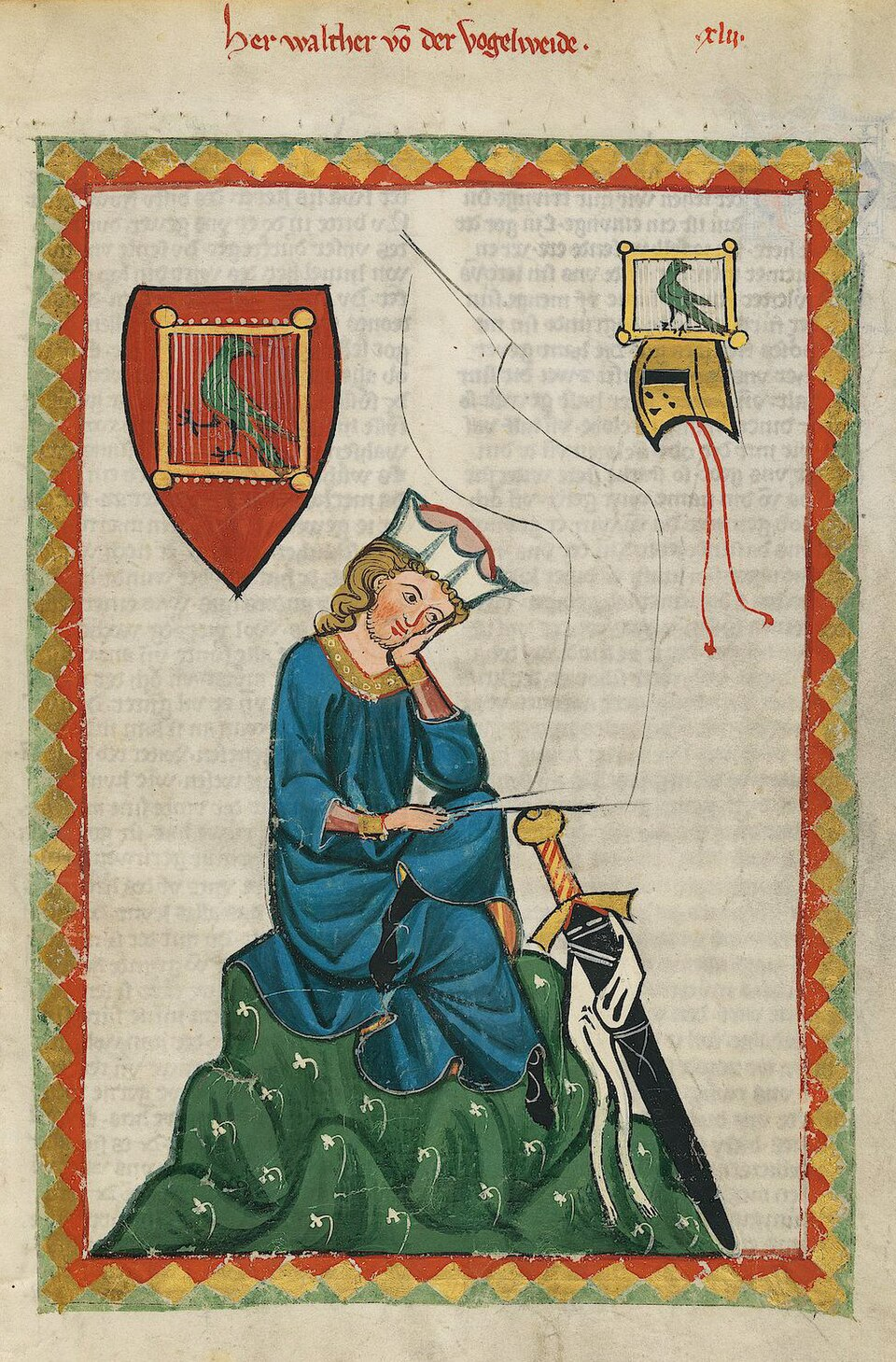
The next few pieces dive deeply into both the realities and fantasies of military life. Deo gracias Anglia, written in honor of Henry V and his victory over France at the battle of Agincourt, gave the audience a good look at how folks immortalized the very real victories of their monarchs. Palastinalied, by Walther von der Vogelweide, told the Christian gospel from the perspective of a pilgrim setting foot in the Holy Land during the Fifth Crusades, sure of his right to claim these lands for God -- a beautiful, if somewhat timely, piece of music. Finally, L'homme armé and the paired Messe L'homme armé: Kyrie revealed that not only did musicians use and reuse texts, but they did so with pieces of composition as well; Antoine Busnois, composer of the L'homme arme Mass, wove the theme of L'homme armé throughout this sacred text. Guest soloist Ethan Montecinos provided his rich baritone as a soloist in the latter two pieces -- we were so grateful to have him with us!

After the intermission, we returned to the celebration of summertime with more dances, performed by soloist John Hedger and the instrumentalists of Musick's Company. Singers and instrumentalists joined together for another Machaut piece, Douce dame jolie, followed by a haunting a capella performance of Ah, robyn, by William Cornysh. Next, we were treated to another pair of dances from the instrumentalists -- Lamento di tristano with an additional rotta. Both the lamento and the rotta were two types of dance in Renaissance Italy. Last, but certainly not least, the entire company rounded out the concert with a classic: Sumer is a cumin in. If you've been to any of our summer concerts, you know it well. Next year, come see us and sing along!

Musick's Company delights in this opportunity to create music with our friends and supporters, as we delight in performing for you all. If you were unable to make it to this concert, fear not -- there will be recordings and videos to follow! If you've never attended one of our concerts, consider this article your official invitation! For more information about our performances, click here. If you would like to financially support us, please consider visiting our donation page by clicking here. The Center for Old Music is a registered non-profit and operates entirely from donations, and your support is deeply appreciated.
We will be returning to the stage soon! Our annual Spring Concert is just around the corner, and will feature music hearkening back to the era of knights and chivalry. We hope to see you all there! Stay tuned for specific dates, times, and more blog posts discussing our program.

Comments